
Hearing Loss, Dementia and the Gap in Care Home Hearing Health
The #1 Modifiable Risk Factor
Hearing Loss, Dementia and the Gap in Care Home Hearing Health
What the evidence says and what care homes can do about it. By Jon Bishop, Clear Ear Cheer
Hearing loss is the single largest modifiable risk factor for dementia. Not smoking. Not obesity. Not physical inactivity. Hearing loss.
That's the conclusion of the 2024 Lancet Commission on Dementia, the most respected body in global dementia research, analysing data from populations across the world. Of the 14 modifiable risk factors they identified, hearing loss carries the highest population-attributable fraction. It sits above all of them.
For care home managers, that's a significant finding. The residents in your care are precisely the population most likely to have undiagnosed or untreated hearing loss and most likely to be carrying the cognitive risk that comes with it.
The good news is that it's modifiable. That word matters. It means something can be done about it. This article sets out what the evidence shows, why it matters specifically in care home settings, and what a structured, practical response looks like.
The 7% Figure
Untreated hearing loss
7% of All Dementia Cases Are Attributable to Untreated Hearing Loss
The 2024 Lancet Commission calculated that 7% of all dementia cases globally are attributable to untreated hearing loss. To put that in perspective, no single dietary change, exercise habit, or medication has that kind of modifiable impact on dementia risk.
of all dementia cases globally are attributable to untreated hearing loss
Source: Lancet Commission on Dementia Prevention, Intervention and Care, 2024
To put it in care home terms if your home has residents living with dementia, statistically some of those cases may have been influenced by decades of untreated hearing loss. We can't go back. But we can act now for the residents whose hearing loss remains unaddressed.
And untreated doesn't always mean undiagnosed. Some residents have hearing aids that simply aren't working properly, are blocked by earwax, are poorly maintained, or are fitted to a prescription that no longer reflects their current hearing. The net effect on their daily hearing function can be just as significant as having no aid at all.
16% Per 10dB
Every 10 decibels of untreated hearing loss increases dementia risk by 16%.
Every 10 Decibels of Untreated Hearing Loss Increases Dementia Risk by 16%
This isn't a binary risk: hearing loss or no hearing loss. It's a sliding scale. The worse the hearing loss, and the longer it goes untreated, the greater the risk climbs. A 2024 systematic review and meta-analysis of 50 cohort studies covering more than 1.5 million participants found a consistent dose-response relationship: every 10 decibels of worsening hearing increases dementia risk by 16%.
increased dementia risk for every 10dB of untreated hearing loss
Source: Yu et al., Ageing Research Reviews, 2024 — 50 studies, 1.5 million participants
Here's what makes that finding especially relevant in a care home setting. Earwax impaction alone can reduce hearing by 20 to 30 decibels. That's two to three steps up the risk scale caused not by progressive hearing loss but by something entirely reversible, often unnoticed, and easily addressed.
A resident whose hearing aid is partially blocked, whose ear canal has significant wax build-up, or whose aid is simply overdue for a clean may be functioning at a significantly worse hearing level than their prescription requires. Every day that continues, the cognitive load increases.
Earwax impaction alone can reduce hearing by 20 to 30 decibels. That's not a hearing condition. That's a blocked ear entirely treatable, often completely unnoticed.
The Three Brain Mechanisms
Untreated hearing loss damages the brain in three ways
How Hearing Loss Damages the Brain: Three Distinct Pathways
Hearing loss doesn't just make it harder to follow conversations. Research now shows it actively changes the brain through three distinct mechanisms, each of which contributes independently to cognitive decline.
- Cognitive overload. When hearing is impaired, the brain works overtime trying to fill in missing words and reconstruct meaning. That constant effort draws cognitive resources away from memory and processing. Over time, the burden accumulates.
- Brain shrinkage. The auditory cortex, the part of the brain that processes sound, atrophies faster when it isn't being properly stimulated. Research using brain imaging has shown measurable differences in brain volume between people with treated and untreated hearing loss.
- Social withdrawal. Conversations become exhausting. Group settings become overwhelming. Residents stop joining in, then stop attending activities, then retreat further. Social isolation is itself an independent risk factor for dementia, so hearing loss triggers a second pathway to cognitive decline.
What's often missed is how quietly these pathways can be accelerated by something as simple as earwax. A blocked ear canal or a poorly maintained hearing aid can significantly reduce hearing function without any obvious signs, resident complaints, or staff flags. The cognitive cost accumulates in the background while the cause goes unaddressed.
For care home staff, recognising the patterns of withdrawal, confusion, and increasing fatigue after social interaction may be as important as the clinical picture. These behaviours are sometimes attributed to dementia progression when the actual cause is something far more treatable.
The 48% Finding
That's a significant finding, and it's worth being precise about what it means
The Treatment Evidence: 48% Slower Cognitive Decline in High-Risk Adults
The ACHIEVE trial, the largest randomised controlled trial of hearing aids for reducing cognitive decline ever conducted, was published in The Lancet in 2023. It followed 977 adults aged 70 to 84 with untreated hearing loss over three years.
slower cognitive decline in older adults at elevated risk
Source: ACHIEVE Trial, The Lancet, 2023 — 977 participants, 3-year follow-up
It's important to be precise about what this finding means. The 48% result was observed specifically in participants who already had more risk factors for cognitive decline, were older, had lower baseline cognitive scores, and had a faster rate of decline. The overall trial result was neutral across the full study population.
For care home managers, that distinction is actually significant in your favour. The subgroup in which hearing intervention made a substantial difference closely matches many of your residents, older adults, often with multiple comorbidities and elevated baseline risk. This is precisely the population the evidence supports treating.
The intervention itself wasn't complex. It was ear health checks, wax removal and hearing aids, properly fitted, properly maintained, and properly followed up. This is emerging evidence, not settled science. But the direction of travel is clear: addressing hearing loss in high-risk older adults is worth taking seriously as part of a broader approach to cognitive health.
Mind The GAP: Dementia and Hearing
Hearing loss is the single largest modifiable dementia risk factor
Mind the Gap: What Care Homes Can Actually Do
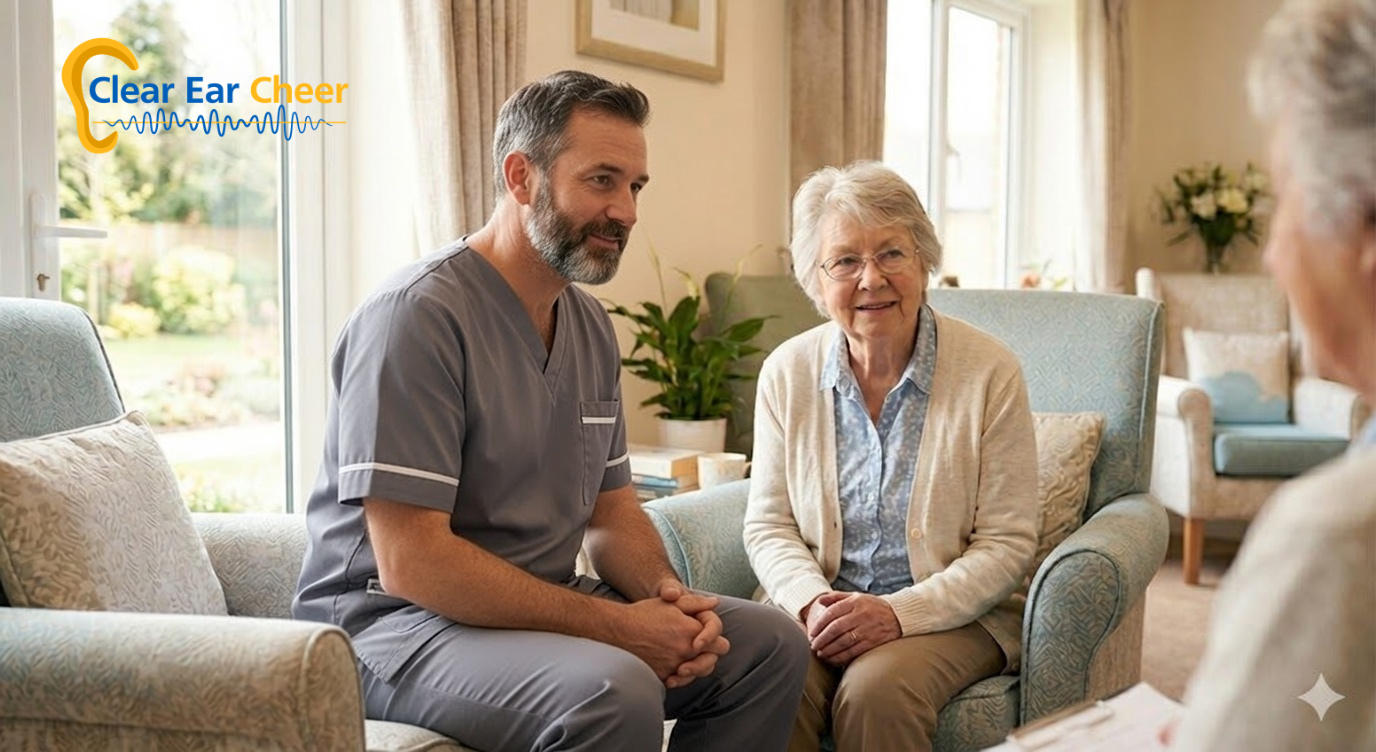
For care homes, the practical question is — what are you actually doing about it? Most care homes are doing everything they can with the resources they have. Hearing care often falls into a gap where it's nobody's specific responsibility, hearing aids go uncleaned, earwax goes undetected, and the problem compounds quietly in the background.
A structured approach doesn't have to be complicated or expensive. A practical care home hearing health framework has three components:
- Regular ear health checks — identifying residents with undetected hearing loss, wax impaction affecting hearing aid performance, and canal health issues that may have gone unnoticed.
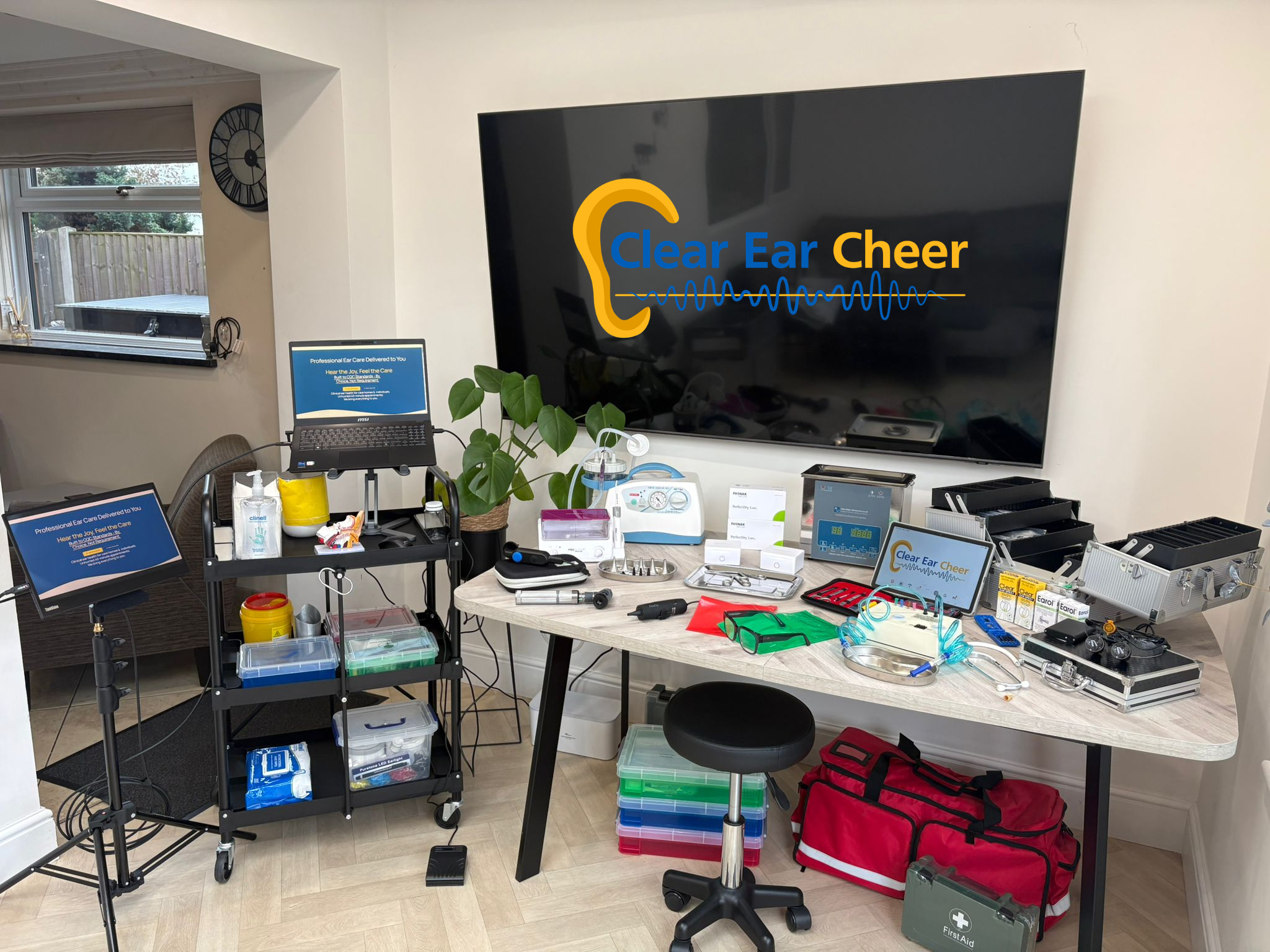
- Scheduled hearing aid maintenance clinics — visiting your home on a regular basis to keep devices clean, functional, and properly fitted. The PerfectDry Lux UV drying system and Jodi-Pro medical-grade vacuum and air pressure cleaning used during these clinics remove debris that routine cleaning cannot reach.
- Clear referral pathways — where something more complex is found, whether that's suspected pathology, significant canal abnormality, or anything outside routine care, a referral to audiology, ENT, or a GP ensures the right professional is involved. Nothing gets missed. Nothing gets filed away.
All findings and interventions are documented, providing a clear record for future CQC audits and supporting your compliance obligations under Regulations 9, 12, and 15 — person-centred care, safe care and treatment, and premises and equipment.
Hearing care doesn't need to fall through the gaps. A structured, scheduled approach is straightforward to implement and the evidence base for why it matters has never been stronger.
Is hearing health falling through the gaps in your care home?
Clear Ear Cheer provides professional mobile ear health checks and hearing aid maintenance clinics directly to care homes across Essex and Suffolk.
All findings documented. Clear referral pathways where needed. CQC audit ready.
Get in touch to arrange a conversation →
Or email directly: jon@clearearcheer.co.uk
